Failure to test compaction leads to failures in your projects.
When I teach ICPI and NCMA classes, I always ask this question to the attending contractors: How do you test compaction on your sites? The response: blank stares, mumbles, maybe 1 hand will come up in the class of 30. How can this be? Another question I ask the contractors is how many of you have had a failure on a job site? This is when I see many hands go up. There's a definite connection here.
From what I've heard in my classes and seen on residential job sites, lack of proper compaction accounts for the majority of job failures. I believe poor compaction often occurs because the contractor has no real idea whether they've achieved the right amount of compaction or not because residential contractors, seldom if ever, test for compaction.
I want to expand on the need for compaction testing because it's so important. I would like to tell you about some less expensive options you can use to test compaction and improve your quality control. As contractors, we must have a way to measure our sub-base and base compaction.
The nuclear option
The nuclear density gauge is the most accurate way to measure compaction density, but the test can cost $300+ because you need to bring in a trained, licensed operator to do it. The nuclear density test is required for most commercial jobs, but it is not necessary for most residential jobs. So let's look at some other methods to measure compaction.
The spike test
The spike test is the most common compaction testing method. Using a 3lb. hammer and 10" spikes, pound the spikes into the compacted base material. If the spike enters the base material easily, you have not reached proper compaction. If you have to work hard to get the spike into the base, you have achieved the minimum level of compaction.
Proper compaction
The most commonly accepted level of compaction for hardscape installations is 98% proctor density. A proctor density test measures the relationship of soil density with respect to soil moisture content under a standard compaction effort. This test identifies the maximum density obtainable in the soil at optimal moisture content.
The penetrometer
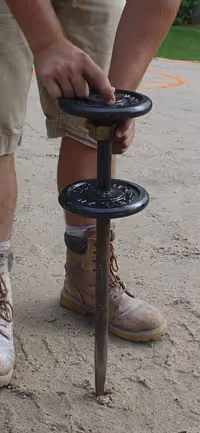
A tool called a penetrometer is also used to measure compaction. You can purchase a penetrometer at various equipment suppliers at a price of $400 to $800. I chose to make my own using materials I had on hand around our shop.
A penetrometer, according to ICPI Level 1 certification materials, "consists of a steel shaft with a sliding hammer on the shaft that is raised and dropped. The impact of the hammer drives the cone tipped drive rod into the soil or base."
Basically, the penetrometer is a device designed to consistently drop a weight onto the base. You measure how deep it sinks into the base. Different depth measurements correspond to different densities.

Go Compatrol
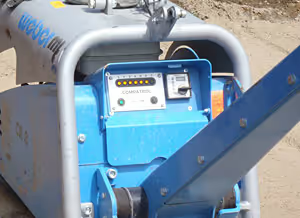
Compactors with the Compatrol System cost more, but I highly recommend their purchase. This system is a computerized measurement that lets you know when the soil you are compacting has reached maximum compaction. This system saves time because you do not over-compact the soil.
For permeable paver installations, the Compatrol System is better than the nuclear density test. That's because nuclear density gauges can't get a good reading when testing the open-graded aggregates in a permeable base.
Proper equipment and materials
Testing lets you know if you've achieved good compaction. But you need to use the right equipment and compact the right materials to get a passing score in your compaction test.
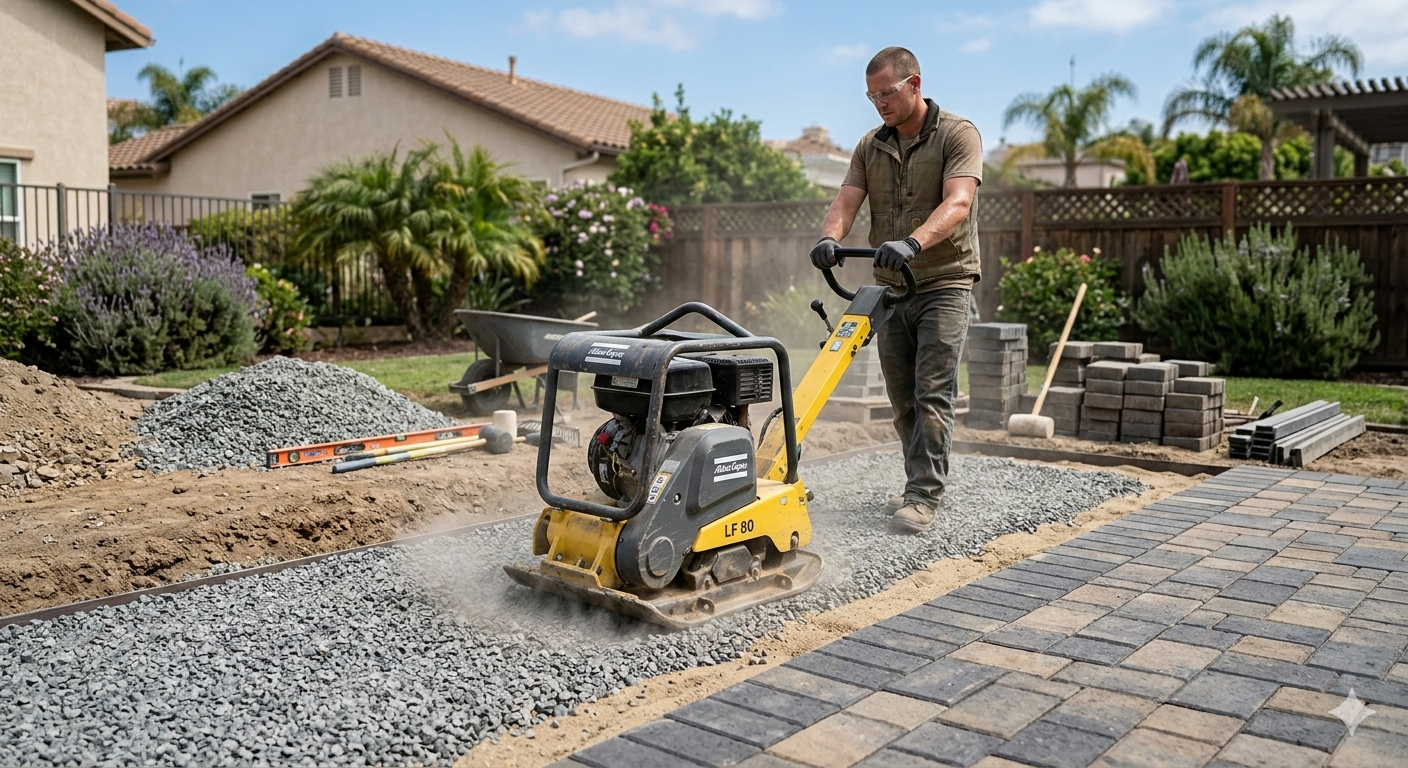
As a hardscape contractor your most important equipment investment, and the investment that needs to be made immediately, is in proper compaction equipment. A $12,000 investment will get you started with the 3 compactors you will need:
- A reversible plate compactor with the compaction force of 6,000 lbf. This compactor is used for compacting sub-base and base materials.
- A rammer (jumping jack) compactor, used for hard-to-compact areas.
- A forward plate compactor with a 4,000 lbf for compacting pavers into the bedding sand.
In addition to compaction equipment, you need to be sure your base and bedding sand materials meet ASTM specifications. Poor quality, non-specification materials may not be able to reach proper compaction levels no matter how heavily they are compacted.
You can get ASTM specifications for materials from both ICPI and NCMA. Your local gravel supplier can provide you with free sieve analysis reports so you can ensure your materials meet the specifications. If they don't, find a product that does.
Using the right materials, operating the right compacting equipment and testing for compaction density goes a long way toward reducing hardscape failures and ensuring quality installations.
Bill Gardocki is the owner of Interstate Landscape Co., Inc. in Londonderry, NH. He has been installing hardscapes for over 30 years. Bill is an ICPI and NCMA Certification Instructor. He also provides hardscape installation seminars to sales reps in the hardscape and softscape industry. Bill may be reached at Bill@InterstateLandscapeNH.com.
Project Profile
There's more where that came from!
Sign-up for our free newsletter to get industry news, advice from experts and project features in your inbox.


%20(2).png)
.jpg)