When you're cutting concrete pavers or block you need take several important factors into consideration. The most important may be the increased regulation of silica dust by your state or municipality. Every hardscape show I attend, I can’t wait to get my hands on the latest and greatest dust collection system for hand-held gas chop saws.
Another consideration is blade selection. Our crews carry 3 cut-off saws and a grinder to every job. One saw has a 16” diamond blade for SRW block cutting. A 2nd saw with a 14” diamond blade is used for concrete paver cutting. A 3rd saw with a 14” general purpose asphalt blade is used exclusively for cutting asphalt. We also carry an electric grinder with a 6” diamond blade for scoring and for cutting tight radii on pavers.
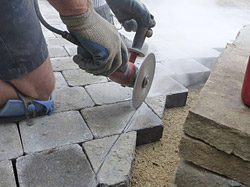
Why bring so many saws?
We try to use the best saw for the application. We use a 16" blade for SRW blocks because it's large enough to cut through the blocks we use in 1 pass. But it's harder to cut radii with the larger blades. So for pavers we prefer the smaller 14" blades. Also, pavers, at 10,000 – 12,000 psi are tougher to cut than SRW units at 3,000 – 4,000 psi. So I buy general purpose diamond blades for the 16” SRW saw and high quality 14” diamond blades for the paver saw.
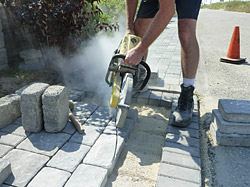
We carry an asphalt saw because blades made to cut pavers will wear excessively fast when cutting asphalt. That's because asphalt is very abrasive whereas concrete/brick pavers are not. So the materials and designs manufacturers use for asphalt blades and paver blades are very different.
Another reason to carry multiple saws is that if one of them breaks down, we can make do with one of the others. You always want to have a backup in case one doesn't start. We carry backups for our compactors and for all other power tools too.
Cut in place
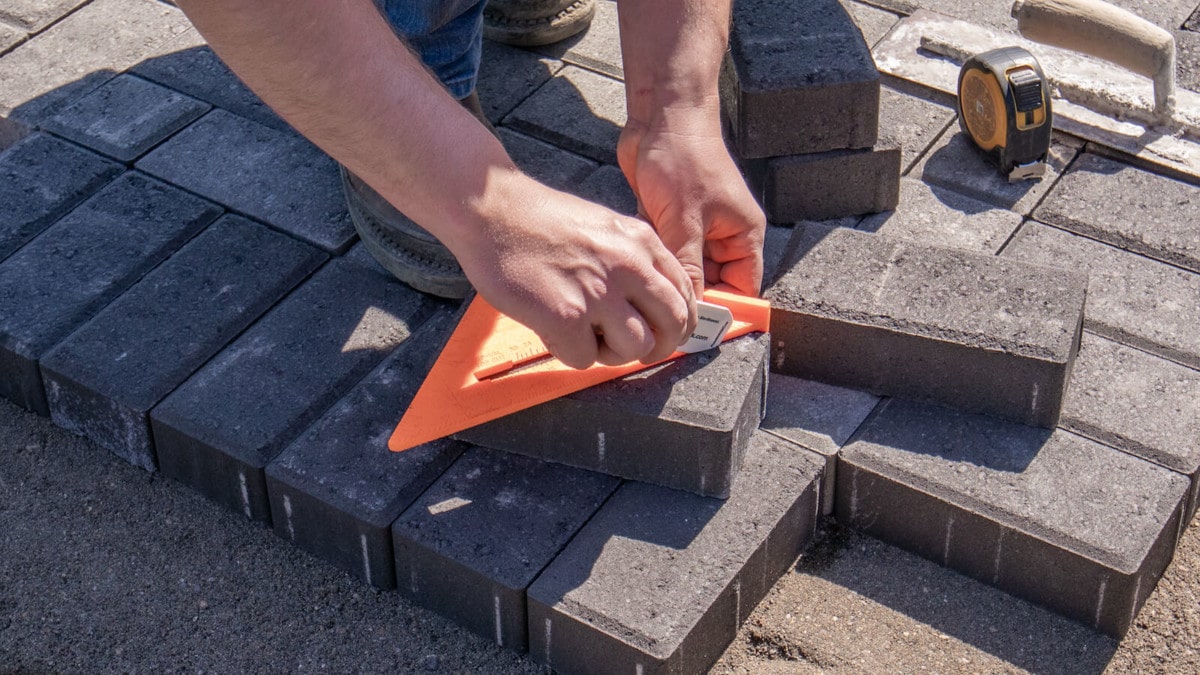
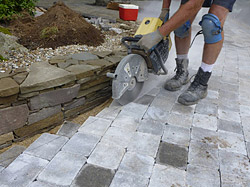
We cut our pavers in place by bringing the saw to the work. This means the blades hit the bedding sand under the pavers as we cut them. The bedding sand under the pavers is actually more abrasive than the pavers, and dulls the blade quicker than cutting the pavers on a table saw. Therefore, our blades don’t last quite as long as table saw blades. The big advantage to cutting in place is labor savings because it's faster.
Not all of your employees will be comfortable operating a handheld cut-off saw. It may take several training sessions at your shop to get some of your employees up to speed and feeling confident cutting in place.
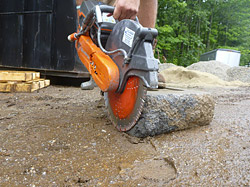
Always wear eye and ear protection when cutting. Pay attention to wind direction. Be considerate of your client’s home by telling them to close windows and move vehicles away from the dust zone. If the wind is working against you, have an employee use a backpack blower to help direct the dust away from the structure. Blow off any dust from any plants, cars, and adjacent structures after cutting.
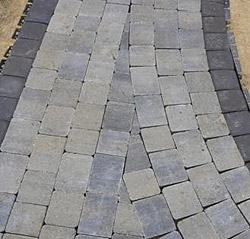
It's critical to do all you can to manage the dust from your work. You want the client's lasting impression of your work to center on the beautiful project you built for them, not on the dust/mess they had to put up with.
Bill Gardocki is the owner of Interstate Landscape Co., Inc. in Londonderry, NH. He has been installing hardscapes for over 30 years. Bill has taught over 75 classes as an ICPI and NCMA Certification Instructor. He also provides hardscape installation seminars to sales reps in the hardscape and softscape industry. Contact Bill@InterstateLandscapeNH.com.
Project Profile
There's more where that came from!
Sign-up for our free newsletter to get industry news, advice from experts and project features in your inbox.


%20(2).png)
.jpg)