Delays.
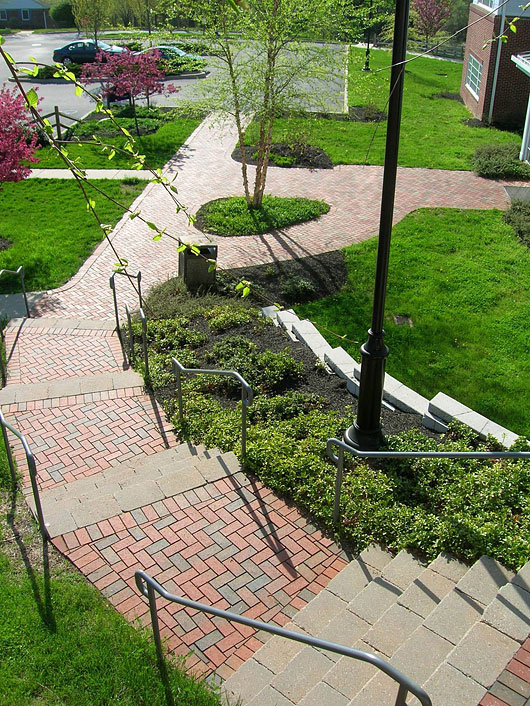
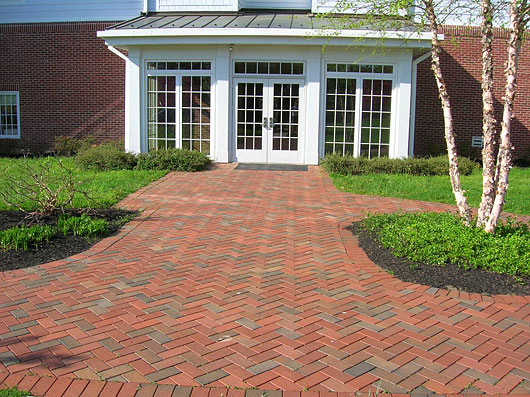
You can pretty much count on a delayed start when you know you're going to be the last contractor on a new-build commercial construction job. And so it went when Ross Causey won a 33,000 sq. ft. paver/ 3,500 sq. ft. retaining wall job surrounding a 45,000 sq. ft. building.Windows and doors were delivered late. There were problems with the HVAC systems. Delays went on and on to the point where Ross's part of the project started almost 2 months late, moving from early July to late August.Normally, delays aren't a big deal. But this project was for a school with about 700 students. The delay meant Ross's Garden Square Landscaping would no longer be working freely around an empty building. Instead, kindergarteners through high schoolers would be walking through their work every hour when the bell rang.As the delays began to add up and it became clearer that they would be working into the school year, Ross's meetings with John Emery the school's Director of Plant Operations became more frequent. How would they be able to work around pedestrian traffic, especially since the job included laying pavers at all 3 entries to the building where classes were being held?"It complicated the job 10-fold," reflects Ross, "because the doorways out to the plazas had not been paved with any surface at all. And we needed to maintain access to the building, and at the same time construct the pavement and the sitting walls."
Get ready
Well before Garden Square started work, Ross was talking with the general contractor to ensure the area around the building foundation would be suitable for supporting a hardscape installation. He says, "The over-dig for the basement was 16' deep and at least 6' out from the building. We were extremely concerned about the settlement so the general contractor agreed to backfill with clean number 57 quarter-inch stone and compact that as they went. It added to their cost. But compaction is critical and that really did the job."With less than 10 days before the first day of school, Garden Square was finally on the job. Their plan was to speed through construction of the paver walkway to the main entry so there would be 1 entry completed before school started. Then they put up plywood boardwalks lined by orange construction fencing to allow access to the other entries while channeling foot-traffic away from construction areas. They worked nights and weekends to get to this point.Ross says paving that first entry went fast. "The rest were maddening at times. With everyone coming through there, safety was our number 1 concern. Fortunately there were no incidents."The fences added to safety, but created additional obstacles that got in the way. The boardwalks proved rickety and unstable especially in areas that were uneven or sloped - which defines most of the school terrain. So they replaced much of the plywood with concrete.Ross explains, "We did a quick pour right over the dirt so there was no base below the concrete. It was very temporary because it was going to be ripped out. Even though it was temporary we still had to plan for drainage or we would have had a mess on our hands."
School's in session
Ross says there was a stretch where he had meetings nearly every day to coordinate what was happening at the school with what was going on in construction. For the most part they rolled with the punches pretty well, but things could get contentious at times."During class change, sometimes we had to just shut down especially when we were compacting. At one point there were SATs going on so we were not allowed to compact the whole day. And of course that happened when we needed to compact.""They were as frustrated as we were. We knew it wasn't their fault so we charged the extra work on a time and materials basis. The additional billing covered our overhead and overtime. Jerry Gaeta and Charles Vander Kooi have been instrumental in helping us know what we need to charge, and build our business with their MORS philosophy of operations and profitability."
Construction proceeds
Excavating around obstacles
Garden Square excavated up to the temporary walkways. Excavating was tricky. The new building is near the center of a campus dating back to the 1930s. With the land reshaped to accommodate the new building, utilities serving the school weren't buried deep enough, and Ross says several were hit during construction. Working around them made drainage a challenge.
Ross says the backhoe he rented for the job was great for precision excavating around the buried utility pipes and up close to buildings. The backhoe supported Garden Square's Case and Dingo skid-steer loaders on the job.
Heavy clay demands geo-textile
A soil analysis showed a high degree of clay, so after compacting the subsoil the crew installed geo-textile to keep the clay fines from infiltrating the base stone.
Big base, big compactor
On commercial jobs like this Ross's crew installs a minimum 6" base which extends 6" out beyond the area to be paved. They then compact with their big 12,000 lb. centrifugal force Mikasa reversible plate compactor. After renting the Mikasa for years for big jobs Ross got a deal buying it from the rental yard.
Edge restraint comes after pavers?
With 1" of course concrete bedding sand in place, Ross likes to install pavers before edge restraint. They lay 3 or 4 courses of pavers beyond the line to be cut. So the pavers extend out 12" to 16", with some beyond the edge of the base. Extra bedding sand extends out over the soil to support the pavers.Ross says, "At the ICPI classes [he teaches] everyone is surprised when I tell them this, but it's the most efficient method. We mark it and cut it with a cut-off saw. We extend the pavers out because the saw creates so much vibration that you need some stability for the cut. The pavers that aren't cut are re-used. The sand is the only thing wasted."The next question contractors ask Ross: After you remove the cut pavers and excess sand, how do you get the edging in without losing sand beneath pavers? Ross answers, "Sand has to have the proper amount of moisture in it. If too dry we'll hose it down. We cut away the excess sand with a trowel or a flat shovel, and that exposes a nice clean vertical cut. We push the edge restraint up snug and spike it in."They cut with a wet table saw in areas where they don't have room to extend pavers out so far.
Compacting without hurting pavers
Ross's people follow ICPI standards doing an initial compaction over the pavers before sweeping sand in the gaps. This compresses the setting bed sand up into the joints. Then while there's a thin coating of sand on the surface they compact it again to work the sand down into the joints. Ross says, "It didn't mar the pavers at all. Pinehall pavers have to meet certain specifications. We compacted the entire project this way without a problem."
Seat walls built to last
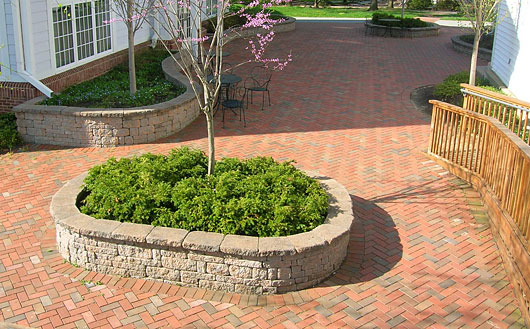
In seat-wall areas the process went a little different. Since the walls defined the outer perimeter for the pavers, they would serve as the edge restraint.The crew installed a minimum 12" of base and 1 wall block buried below grade. Normally they would have then finished the wall before moving on to the pavers. But the school was very concerned about access to the building, so they built the wall just high enough to serve as the paver edge. Then they laid pavers and eventually came back and finished the wall.Ross says his people used adhesive between every course of wall block. Behind the wall they installed a layer of Advanced Drainage System (ADS) wrapped in geo-textile to enhance drainage. The product is about 1/2" thick, looks somewhat like a continuous egg carton.Did they over-build the wall? Ross doesn't think so. "This was such a public area. I just wanted to take a 'belt and suspenders' route. You get 1 chance to do it right. I'd rather overdue it to ensure it will last."With the hardscape done, the school grounds people finished out the landscaping and lighting around the area.Ross says, "When you're on a project for 10 weeks, in a way it's hard to move on. We did have some fun interacting with the kids. I hope we left a favorable impression. But I won't miss working around them.
Project Profile
Profile
Garden Square Landscaping, Inc.
Kennett Square, PA
Ross Causey, President
Founded 1987
Services
65% sand set pavers
15% segmental retaining walls
20% landscape design and construction
Customer base
80% high-end residential development
20% commercial
Largest project
Sanford School project
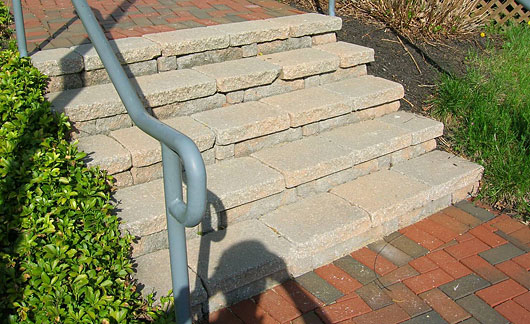
Plaza area, steps, sitting walls
33,000 sq. ft. Pine Hall Clay Pavers
3,500 sq. ft. E.P. Henry Coventry Wall
Largest job size
$35,000
Annual sales
$600,000 (2008)
Employees
8
There's more where that came from!
Sign-up for our free newsletter to get industry news, advice from experts and project features in your inbox.



.png)